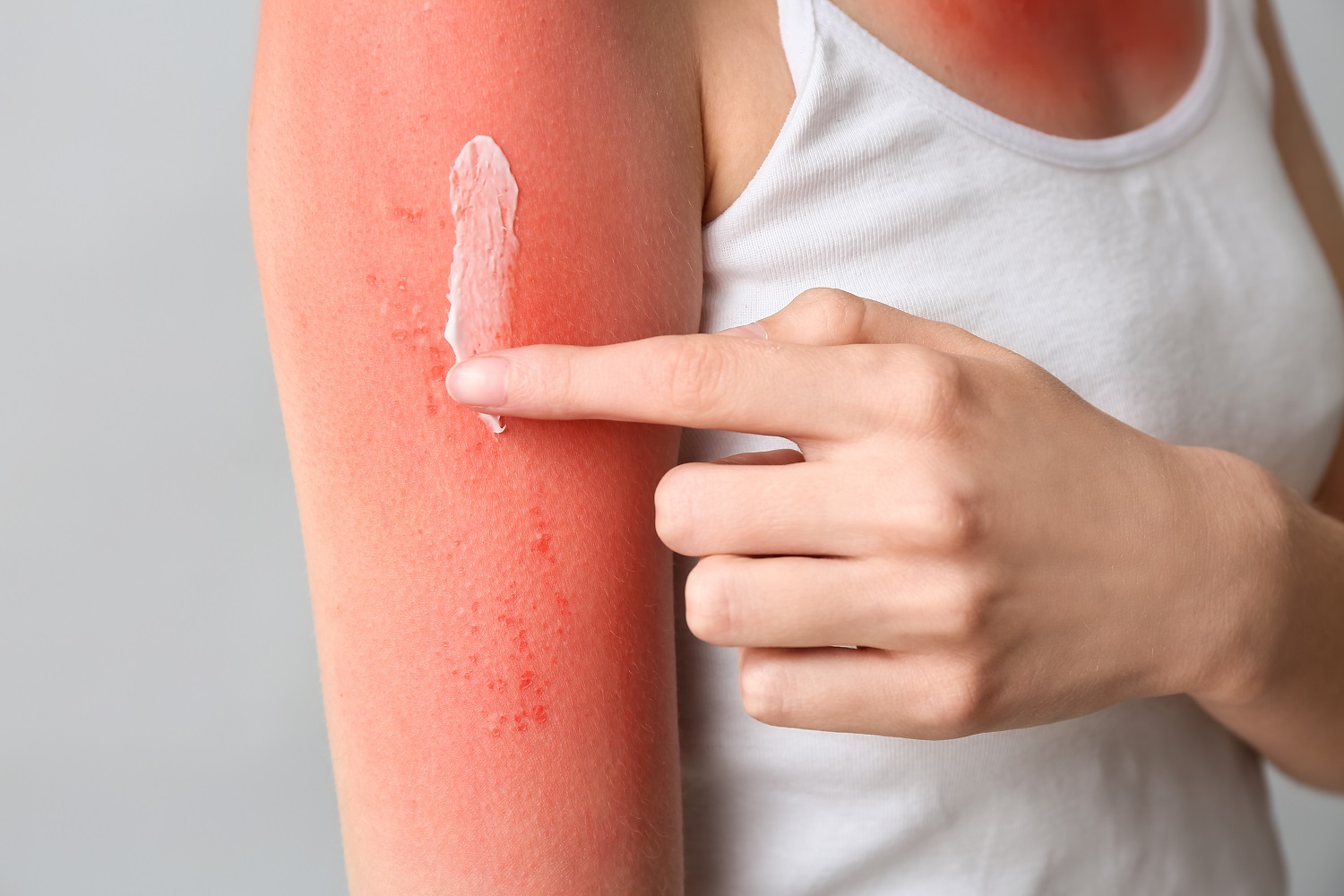
Persistent redness, blisters, burning sensation after alaser hair removal session… These undesirable effects can occur, particularly on sensitive areas such as the bikini line, underarms or face. How can you recognize a real burn? What to do if it happens to you? And above all, how can you avoid it? CtrlZ explains everything you need to know on this subject, which is a legitimate concern for many patients.
Burn or normal reaction: how to tell the difference?
After a laser hair removal session, it is normal to experience certain skin reactions. The laser heats the hair to destroy the bulb, so the surrounding skin may react temporarily.
Normal reactions (not serious)
These symptoms are frequent and generally disappear within a few hours to 72 hours:
- Erythema (diffuse redness) in the treated area
- Perifollicular edema: small swellings around each treated hair
- Sensation of heat comparable to a mild sunburn
- Mild pruritus (itching)
- Sensitivity of the treated area
Signs of a real burn (to watch out for)
Seek prompt medical attention if you observe :
- Fluid-filled blisters (phlyctenes )
- Intense redness lasting more than 72 hours
- Heavy or oozing scabs
- Severe pain that does not subside
- Changes in skin color (white or very dark areas)
⚠️ If in doubt, contact your
At CtrlZ, a medical hotline is on call 24/7 to deal with any adverse effects you may experience after your sessions. Don’t wait to report any unusual symptoms.
Why do burns occur?
Laser hair removal burns are not inevitable. They are generally the result of identifiable and avoidable factors.
1. Unsuitable laser parameters
This is the most frequent cause. If laser energy (fluence) is too high for the patient’s phototype or the area being treated, skin damage can occur. This is why the practitioner’s expertise and the quality of the equipment are essential.
2. Tanned skin or recent sun exposure
Tanning increases the amount of melanin in the skin. However, the laser targets melanin: tanned skin therefore absorbs part of the energy intended for the hair, considerably increasing the risk of burns. This is a strict contraindication with the Alexandrite laser (755 nm).
3. Wrong wavelength
Using an Alexandrite laser on darker skin (phototype IV to VI) can lead to burns. These melanin-rich skins require an Nd-YAG laser (1064 nm), which penetrates deeper and preserves the epidermis. This is why choosing the right laser technology for your phototype is essential.
4. Products and medicines: what you need to know
Contrary to popular belief, photosensitizing drugs do not increase the risk of laser burns. Their effect concerns ultraviolet (UV) radiation, not the wavelengths used for laser hair removal (700-1064 nm). On the other hand, certain treatments can weaken the skin or slow healing: it is therefore important to inform your practitioner before each session.
Avoid using cosmetics containing perfume, alcohol or essential oils on the areas to be treated for 72 hours prior to the treatment.
5. Particularly sensitive areas
The bikini line (especially the fold between the buttocks and the labia majora), underarms and face are areas where the skin is thinner and more reactive. They require adapted parameters and special expertise.
6. Unshaven hair before the session
If the area is not properly shaved, the hair visible above the skin absorbs some of the laser energy. This energy then diffuses into the epidermis instead of targeting the bulb, increasing the risk of superficial burns.
💡 Why is the swimsuit more at risk?
The bikini area combines a number of factors: thin skin, friction, humidity and thick, dense hair. Bikini burns are often the result of overly aggressive parameters or a lack of experience on the part of the practitioner with this intimate area.
Laser hair removal burn: what to do?
If you notice any signs of burning after your session, follow these steps:
In the first few hours
- Cool the area with compresses soaked in thermal water or a damp glove.
- Do not put ice cubes directly on the skin: this can aggravate the burn.
- Apply the healing cream provided by your center, several times a day.
- Avoid non-prescribed oils, cosmetics and antiseptics
- Don’t scratch, even if it itches
- Avoid chafing: wear loose-fitting clothing made of natural fibers
In the days that follow
- Contact your center to report the adverse reaction – a teleconsultation with photos can often establish the diagnosis and prescribe appropriate treatment
- Continue local care with a healing cream (such as Cicaplast, Cicalfate or equivalent) or a hydrocolloid dressing if prescribed.
- Absolutely avoid sunlight on the affected area (risk of permanent pigmentation spots).
- Never pierce blisters: they protect the healing skin.
- Avoid swimming (pool, sea, bath) until the skin has healed.
A check-up at D3-J5 may be suggested by your practitioner to verify that healing is progressing well.
When should you see a doctor?
A medical consultation is necessary if :
- Blisters are widespread or become infected (pus, fever)
- Pain remains intense after 48-72 hours
- Signs of infection (spreading redness, heat, oozing)
- Healing does not progress after one week
✓ The right CtrlZ reflexes
- Apply the healing cream supplied 2 to 3 times a day for 24-72 hours.
- Use SPF 50 sun protection on exposed areas
- Wear loose-fitting clothes made of natural materials
- If in doubt, call your health care center’ s emergency hotline.
Find out more in our guide to healthy skin.
Scars and blemishes: what are the possible after-effects?
An improperly treated burn can leave its mark. Here are the possible after-effects and how to avoid them.
Hyperpigmentation (dark spots)
Burnt skin can darken in response to inflammation, especially if exposed to the sun during the healing process. These spots are often reversible within a few months, with strict sun protection and sometimes depigmenting treatments.
Hypopigmentation (light spots)
Rarer but more problematic, the skin can lose its pigmentation and become lighter. On darker skins, this sequel can be permanent.
Scars
Deep burns (2nd degree and above) can leave scars, especially if the blisters have been pierced or if an infection has developed. Appropriate medical care limits this risk.
How to avoid laser hair removal burns?
Prevention is essential. Here are the key points for safe sessions.
Choosing the right center
- Medical supervision: opt for centers with medical supervision and teleconsultation facilities – discover CtrlZ expertise
- Suitable equipment: make sure the center has several wavelengths (Alexandrite AND Nd-YAG) to suit your phototype.
- Preliminary laser test: a serious center always performs a test on a small area during the information consultation.
- Qualified professionals: state-qualified, laser-trained nurses
Observe contraindications and instructions
- No tanning: avoid sunlight and UV rays on treatment areas before and after sessions
- Shave the area properly the day before or the day of the session (an unshaven hair increases the risk of burns).
- Report all medications: even if they don’t directly increase the risk of burns, some can weaken the skin or slow healing.
- No irritating products: avoid perfumes, alcohol and essential oils on areas to be treated 72 hours beforehand.
Communicating with your practitioner
- Report any reactions after previous sessions
- Inform of any sun exposure, however slight
- Don’t hesitate to ask for a break if the pain is too intense during the session.
🔬 The importance of the double wavelength
CtrlZ centers are equipped with dual-wavelength lasers: Alexandrite (755 nm) for phototypes I to III and Nd-YAG (1064 nm) for phototypes IV to VI. This technology makes it possible toadapt the treatment to each skin type and minimize the risk of burns. Find out more about the treatment process.
Laser hair removal burn: frequently asked questions
Is it normal to have redness after laser hair removal?
Yes, slight redness and perifollicular edema (small swellings around the hairs) are normal reactions. They generally disappear within 1 to 2 hours, sometimes up to 72 hours for sensitive skin. After that, contact your center.
How long does it take to heal a laser burn?
Healing time depends on the depth of the burn:
- 1st degree burn (redness, sensation of heat): 5 to 10 days
- 2nd-degree superficial burn (blisters): up to 15 days
- Deep 2nd degree burn: several weeks, medical follow-up essential
After healing, a transitory phase of depigmentation (slightly lighter skin) may occur. The skin generally returns to its original appearance after a few weeks.
What cream should I use on a burn after laser hair removal?
Use a fragrance- and alcohol-free healing cream: Cicaplast (La Roche-Posay), Cicalfate (Avène), or the cream supplied by your center. Avoid products containing petroleum derivatives (Vaseline, Dexeryl), which can occlude the skin.
Can laser hair removal be continued after a burn?
You must wait for complete healing before resuming sessions on the affected area. Laser parameters will need to be reassessed and probably reduced. A burn does not necessarily prevent you from continuing treatment, but it does require adaptation.
Intense pulsed light or laser: which burns more?
Intense pulsed light (IPL) actually presents a greater risk of burns than medical lasers. Being polychromatic (several wavelengths), it is less specific to hair melanin, and some of the energy can be absorbed by the skin. The monochromatic laser is more precise and safer when properly parameterized. To find out more, read our article CtrlZ unravels the myths of laser hair removal.
Is it possible to file a complaint after a laser burn?
In the event of proven damage, you can hold the professional liable. Document the injuries (photos), keep all supporting documents and consult a doctor to draw up a medical certificate. The first step is to contact the center to find an amicable solution and obtain appropriate treatment.
The CtrlZ approach for safe sessions
At CtrlZ, burn prevention is at the heart of our protocol:
- Systematic medical appraisal during information consultation
- Preliminary laser test to assess your skin’s tolerance
- Dual wavelength to suit all phototypes
- Follow-up questionnaire before each session to detect contraindications
- Parameters adapted to each zone and each patient
- Integrated laser cooling system for skin protection
- Healing cream supplied after each session
- 24/7 medical hotline in the event of an adverse reaction
The information consultation is free of charge. It’s an opportunity to evaluate your skin, perform a laser test and ask all your questions before making a commitment. See also our laser hair removal prices.